Weaver
Memory and context
Before a hearing, it can connect older plans, testimony, public records, and unresolved questions—without hiding disagreement.
 Contact us
Neighborhood AI builds community-governed civic memory: the knowledge, relationships, questions, and commitments a neighborhood needs to remember, reason, negotiate, and act together.

Local history, public records, and lived knowledge are often scattered across files, meetings, and people's memories. Used carefully, AI may help people organize what is already there, see patterns, and ask better questions when a neighborhood decision is underway.
It cannot replace judgment, organizing, or community governance. Community members retain authority over the questions, the knowledge that is used, and the decisions that follow.
Read our approach →Plans, testimony, photos, oral history, public records, organizing knowledge, and unfinished arguments do not need to collapse into one account to become useful. They need to remain findable, connected, reviewable, and available when a decision is on the table.
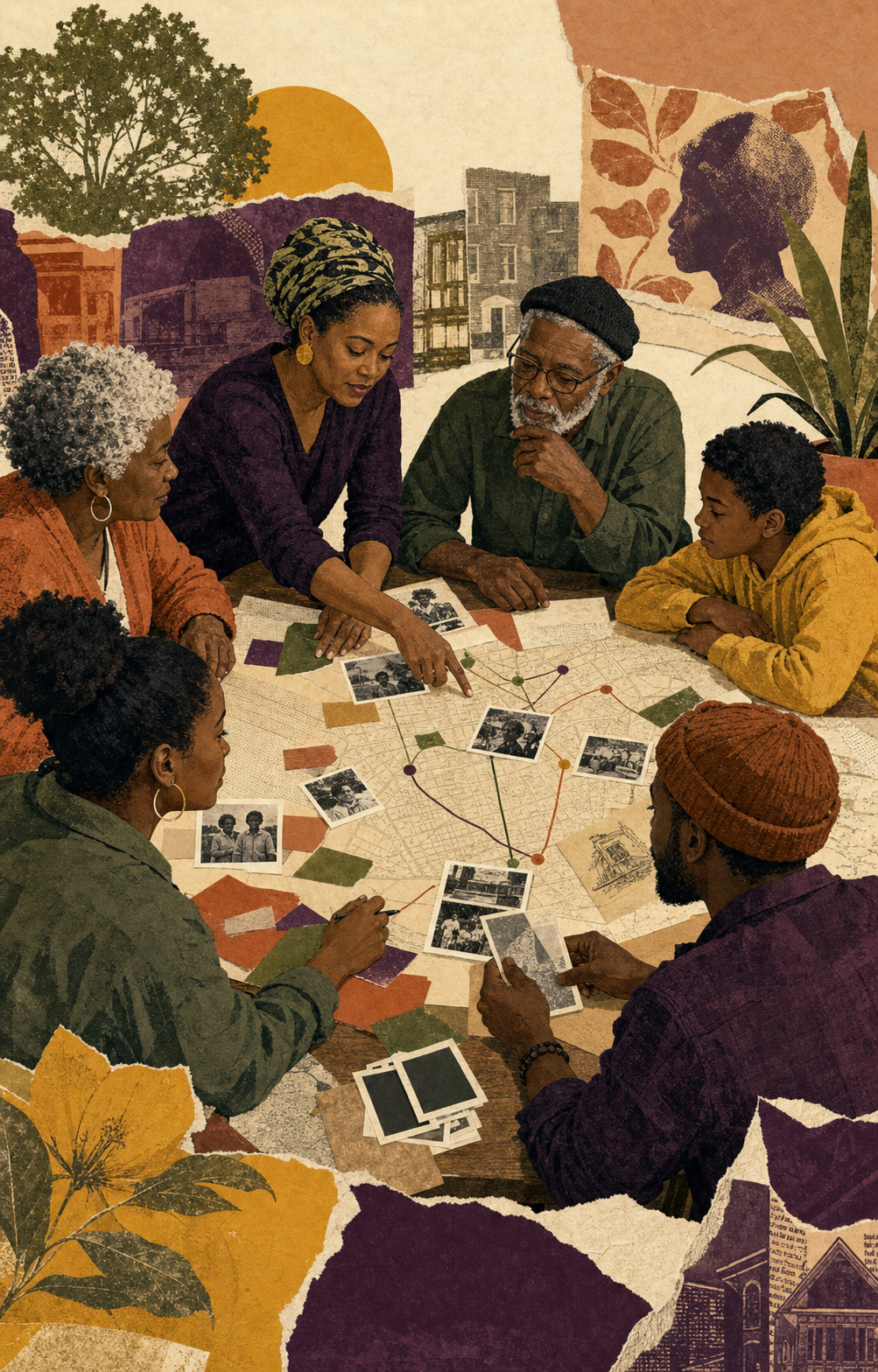
Before a hearing, proposal, or public meeting, bring together the source record, lived experience, past commitments, authority, risks, and unresolved questions.
During the public process, compare real alternatives with evidence, assumptions, tradeoffs, uncertainty, and disagreement still visible.
After a decision, follow promises into implementation: what happened, what changed, what remains incomplete, and what should inform the next public process.
Before a hearing, it can connect older plans, testimony, public records, and unresolved questions—without hiding disagreement.
It can help a group see who holds power, who is responsible for the next step, who is affected, and where accountability sits.
It can help a group compare different ways forward, surface counterdesign options, and prepare action around a public decision.
Shared boundary: AI may help organize and inspect local knowledge. People set the questions, check the sources, keep disagreement visible, and decide what action to take. See the design principles.
Source-grounded decision support means people can see the records behind a finding, how the finding was reached, what is uncertain, and what is missing. Community direction emerges through people remembering, organizing, questioning, disagreeing, imagining, and deciding together.
Community institutions preserve experience, obligations, and reasoning across generations.
Collective learning turns lived knowledge into strategy without flattening disagreement.
Neighborhood AI extends this civic function; it does not claim to replace it, automate it, or speak for the neighborhood.
We are developing Neighborhood AI through neighborhood partnerships, practical prototypes, and shared learning in Boston.
Email us ↗